Medical student attitudes toward healthcare sustainability education at a multi-site private United States medical school
DOI:
https://doi.org/10.63697/jeshs.2025.10046Keywords:
Medical education, Environmental education, Sustainable healthcare, Climate change, Planetary healthAbstract
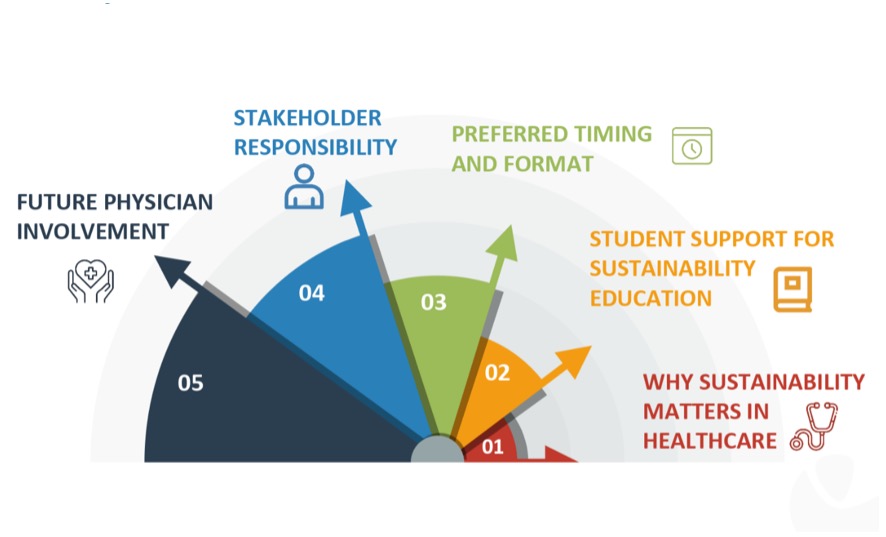
Climate change and healthcare’s environmental impact pose urgent global health challenges, yet little is known about how United States (U.S.) medical students view their role in advancing sustainable healthcare. This study surveyed students at a private, tri-site U.S. medical school to assess their perspectives on sustainability in medicine, its place in medical education, and its relevance to future careers. Two anonymous online surveys were distributed in January and July 2024 to all enrolled students at Mayo Clinic Alix School of Medicine, USA. Descriptive statistics and chi-square analyses assessed attitudes toward curricular needs, stakeholder responsibility, and future involvement in sustainability efforts. Students identified government regulators and healthcare administrators as holding the greatest responsibility for improving healthcare sustainability, while still attributing meaningful responsibility to physicians. Across both surveys, 88% of respondents agreed that healthcare sustainability should be taught in medical training (p < 0.001), and 62% reported insufficient education in their current curriculum (p < 0.001). Students preferred sustainability content integrated throughout the curriculum rather than delivered as isolated sessions and identified the preclinical years and residency as the most appropriate stages for this instruction. Interest in future sustainability involvement was high at 65% (p < 0.001), with students expressing interest in clinical practice, policy, advocacy, and medical education. These findings highlight strong student motivation to participate in sustainability initiatives and underscore the need for standardized, longitudinal sustainability education across medical training.
Downloads
References
Aboueid, S., Beyene, M., Nur, T., 2023. Barriers and enablers to implementing environmentally sustainable practices in healthcare: A scoping review and proposed roadmap. Healthcare Management Forum, 36, 405–413. DOI: https://doi.org/10.1177/08404704231183601
Al Kuwaiti, A., Nazer, K., Al-Reedy, A., Al-Shehri, S., Al-Muhanna, A., Subbarayalu, A.V., Al Muhanna, D., Al-Muhanna, F.A., 2023. A review of the role of artificial intelligence in healthcare. Journal of Personalized Medicine, 13, 951. DOI: https://doi.org/10.3390/jpm13060951
Alowais, S.A., Alghamdi, S.S., Alsuhebany, N., Alqahtani, T., Alshaya, A. I., Almohareb, S.N., Aldairem, A., Alrashed, M., Bin Saleh, K., Badreldin, H.A., Al Yami, M.S., Al Harbi, S., Albekairy, A.M., 2023. Revolutionizing healthcare: the role of artificial intelligence in clinical practice. BMC Medical Education, 23(1). DOI: https://doi.org/10.1186/s12909-023-04698-z
Andic, D., Vorkapic, S.T., 2017. Teacher education for sustainability: The awareness and responsibility for sustainability problems. Journal of Teacher Education for Sustainability 19, 121–137. DOI: https://doi.org/10.1515/jtes-2017-0018
Bekbolatova, M., Mayer, J., Ong, C.W., Toma, M., 2024. Transformative potential of AI in healthcare: Definitions, applications, and navigating the ethical landscape and public perspectives. Healthcare, 12, 125. DOI: https://doi.org/10.3390/healthcare12020125
Blanchard, O.A., Greenwald, L.M., Sheffield, P.E., 2023. The climate change conversation: Understanding nationwide medical education efforts. The Yale Journal of Biology and Medicine, 96, 171–184. DOI: https://doi.org/10.59249/PYIW9718
Brown, L.H., Buettner, P.G., Canyon, D.V., 2012. The energy burden and environmental impact of health services. American Journal of Public Health 102, e76–e82. DOI: https://doi.org/10.2105/AJPH.2012.300776
Curriculum Topics in Required and Elective Courses at Medical School Programs, 2024. AAMC. https://www.aamc.org/data-reports/curriculum-reports/data/curriculum-topics-required-and-elective-courses-medical-school-programs (accessed 2.9.25).
Curriculum Topics in Required and Elective Courses at Medical School Programs, 2023. AAMC. https://www.aamc.org/data-reports/curriculum-reports/data/curriculum-topics-required-and-elective-courses-medical-school-programs (accessed 2.9.25).
Dolcini, M., Ferrè, F., Brambilla, A., Capolongo, S., 2025. Integrating environmental sustainability into hospitals performance management systems: a scoping review. BMC Health Services Research 25, 764. DOI: https://doi.org/10.1186/s12913-025-12928-x
Eckelman, M.J., Sherman, J., 2016. Environmental Impacts of the U.S. Health Care System and Effects on Public Health. PLoS One 11, e0157014. DOI: https://doi.org/10.1371/journal.pone.0157014
Eco-Anxiety Negatively Impacts Daily Lives of One in Two U.S. Youth According to SHU Poll, 2024. Sacred Heart University. www.sacredheart.edu/news-room/news-listing/eco-anxiety-negatively-impacts-daily-lives-of-one-in-two-us-youth-according-to-shu-poll/ (accessed 8.22.25).
Faiyazuddin, Md., Rahman, S.J.Q., Anand, G., Siddiqui, R.K., Mehta, R., Khatib, M.N., Gaidhane, S., Zahiruddin, Q.S., Hussain, A., Sah, R., 2025. The impact of artificial intelligence on healthcare: A comprehensive review of advancements in diagnostics, treatment, and operational efficiency. Health Science Reports, 8. DOI: https://doi.org/10.1002/hsr2.70312
Flynn, F.M., Martinsen, S.S., Øiseth, F., Flo, J., Leonardsen, A.-C.L., 2025. Sustainability in the operating room: a cross-sectional survey of nurse anaesthetists’ and operating room nurses’ views and practice. BMC Nursing, 24(1). DOI: https://doi.org/10.1186/s12912-025-03239-x
Fuller, R., Landrigan, P.J., Balakrishnan, K., Bathan, G., Bose-O’Reilly, S., Brauer, M., Caravanos, J., Chiles, T., Cohen, A., Corra, L., Cropper, M., Ferraro, G., Hanna, J., Hanrahan, D., Hu, H., Hunter, D., Janata, G., Kupka, R., Lanphear, B., Lichtveld, M., Martin, K., Mustapha, A., Sanchez-Triana, E., Sandilya, K., Schaefli, L., Shaw, J., Seddon, J., Suk, W., Téllez-Rojo, M.M., Yan, C., 2022. Pollution and health: a progress update. The Lancet Planetary Health 6, e535–e547. DOI: https://doi.org/10.1016/S2542-5196(22)00090-0
Gupta, D., Shantharam, L., MacDonald, B.K., 2022. Sustainable healthcare in medical education: survey of the student perspectives at a UK medical school. BMC Medical Education 22, 689. DOI: https://doi.org/10.1186/s12909-022-03737-5
Hampshire, K., Ndovu, A., Bhambhvani, H., Iverson, N., 2021. Perspectives on climate change in medical school curricula—A survey of U.S. medical students. The Journal of Climate Change and Health, Getting to a Greener, Healthier World by 2030: Solutions from Healthcare professionals 4, 100033. DOI: https://doi.org/10.1016/j.joclim.2021.100033
Health care climate footprint report, 2019. Health Care Without Harm (Global). https://global.noharm.org/focus/climate/health-care-climate-footprint-report (accessed 2.9.25).
Hunter, J.D., 2007. Matplotlib: A 2D Graphics Environment. Computing in Science & Engineering, 9, 90–95. DOI: https://doi.org/10.1109/MCSE.2007.55
Karakaş, Ü., Özdemir, V., 2025. Artificial intelligence and environmental impact: Moving beyond humanizing vocabulary and anthropocentrism. OMICS: A Journal of Integrative Biology, 29, 2–4. DOI: https://doi.org/10.1089/omi.2024.0197
King-Mullins, E., 2024. Sustainability, and Beyond: Another Case for the Resurgence of Private Practices. Association of Women Surgeons Blog. https://blog.womensurgeons.org/sustainability-and-beyondanother-case-for-the-resurgence-of-private-practices/ (accessed 11.24.25).
Lenzen, M., Malik, A., Li, M., Fry, J., Weisz, H., Pichler, P.-P., Chaves, L.S.M., Capon, A., Pencheon, D., 2020. The environmental footprint of health care: a global assessment. The Lancet Planetary Health 4, e271–e279. DOI: https://doi.org/10.1016/S2542-5196(20)30121-2
Liu, I., Rabin, B., Manivannan, M., Laney, E., Philipsborn, R., 2022. Evaluating strengths and opportunities for a co-created climate change curriculum: Medical student perspectives. Frontiers in Public Health, 10. DOI: https://doi.org/10.3389/fpubh.2022.1021125
Macpherson, C.C., Hill, J., 2017. Are physicians obliged to lead environmental sustainability efforts in health care organizations? AMA Journal of Ethics 19, 1164–1173. DOI: https://doi.org/10.1001/journalofethics.2017.19.12.ecas2-1712
Magasich-Airola, N., Souberbielle, Q., L’Hotel, L., Momeni, M., Tircoveanu, R., 2024. Waste management in Belgian operating rooms: A narrative review. Acta Anaesthesiologica Belgica, 75, 149–154. DOI: https://doi.org/10.56126/75.2.47
Marill, M.C., 2020. Pressured by students, medical schools grapple with climate change. Health Affairs 39, 2050–2055. DOI: https://doi.org/10.1377/hlthaff.2020.01948
Medical Students for a Sustainable Future, 2025. Medical Students for a Sustainable Future. https://ms4sf.org/ (accessed 3.9.25).
Mortimer, F., 2010. The sustainable physician. Clinical Medicine, 10, 110–111. DOI: https://doi.org/10.7861/clinmedicine.10-2-110
Navarrete-Welton, A., Chen, J.J., Byg, B., Malani, K., Li, M.L., Martin, K.D., Warrier, S., 2022. A grassroots approach for greener education: An example of a medical student-driven planetary health curriculum. Frontiers in Public Health, 10. DOI: https://doi.org/10.3389/fpubh.2022.1013880
Osmanlliu, E., Senkaiahliyan, S., Eisen-Cuadra, A., Kalla, M., Kalema, N.L., Teixeira, A.R., Celi, L., 2025. The urgency of environmentally sustainable and socially just deployment of artificial intelligence in health care. NEJM Catalyst, 6(8). DOI: https://doi.org/10.1056/CAT.24.0501
Otto, I.M., Donges, J.F., Cremades, R., Bhowmik, A., Hewitt, R.J., Lucht, W., Rockström, J., Allerberger, F., McCaffrey, M., Doe, S.S.P., Lenferna, A., Morán, N., van Vuuren, D.P., Schellnhuber, H.J., 2020. Social tipping dynamics for stabilizing Earth’s climate by 2050. Proceedings of the National Academy of Sciences, 117, 2354–2365. DOI: https://doi.org/10.1073/pnas.1900577117
Our Program – CRHE, 2023. https://climatehealthed.org/our-program/ (accessed 11.24.25).
Outcomes for graduates – GMC, 2018. https://www.gmc-uk.org/education/standards-guidance-and-curricula/standards-and-outcomes/outcomes-for-graduates (accessed 2.8.25).
Pereno, A., Eriksson, D., 2020. A multi-stakeholder perspective on sustainable healthcare: From 2030 onwards. Futures, 122, 102605. DOI: https://doi.org/10.1016/j.futures.2020.102605
Philipsborn, R.P., Sheffield, P., White, A., Osta, A., Anderson, M.S., Bernstein, A., 2020. Climate change and the practice of medicine: Essentials for resident education. Academic Medicine, 96, 355–367. DOI: https://doi.org/10.1097/ACM.0000000000003719
Podein, R., Hernke, M., 2024. Value-based care and decarbonization converge at value. WMJ 123, 336–338. https://wmjonline.org/123no5/podein/
Rha, J., Ezran, C., Liu, K.T., Gordon, L.B., 2024. Resident physicians can promote environmental health and climate-informed health care. Journal of Graduate Medical Education, 16, 35–39. DOI: https://doi.org/10.4300/JGME-D-24-00175.1
Roden, R., Griffin, T., Farkouh, E., Cerecedo, L.G., Johnson, G., Habrecht, H., Shah, I., Grigsby-Rocca, G., 2025. Planetary health report card. https://phreportcard.org/
Roewe, B., 2024. Majority of US youth report eco-anxiety, Sacred Heart University survey finds. National Catholic Reporter. https://www.ncronline.org/news/majority-us-youth-report-eco-anxiety-sacred-heart-university-survey-finds (accessed 8.25.25).
Ryan, E.C., Dubrow, R., Sherman, J.D., 2020. Medical, nursing, and physician assistant student knowledge and attitudes toward climate change, pollution, and resource conservation in health care. BMC Medical Education, 20, 200. DOI: https://doi.org/10.1186/s12909-020-02099-0
Sarcone, A., Angelillo, S., Di Gennaro, G., Belfiore, M.G., Pileggi, C., Costa, D., Nobile, C.G.A., 2025. The ecological footprint of healthcare: awareness, knowledge, and attitudes of medical students and medical residents. Frontiers of Public Health, 13, 1711363. DOI: https://doi.org/10.3389/fpubh.2025.1711363
Selvakumar, P., Muralidharan, V., Kumar, G.S., Kumar, D.S., Anand, T., Manjunath, T.C., 2025. Reducing the carbon footprint in healthcare. Journal of Environmental Nanotechnology, 14, 453–463. DOI: https://doi.org/10.13074/jent.2025.03.2511154
Sepetis, A., Rizos, F., Parlavantzas, I., Zaza, P.N., Nikolaou, I.E., 2025. Environmental costs in healthcare system: the case studies of Greece health care. BMC Health Services Research, 25, 522. DOI: https://doi.org/10.1186/s12913-025-12542-x
Shared Responsibility and Proper Medication Disposal, 2022. https://edhub.ama-assn.org/ama-journal-of-ethics/module/2797138 (accessed 2.19.25).
Shaw, E., Walpole, S., McLean, M., Alvarez-Nieto, C., Barna, S., Bazin, K., Behrens, G., Chase, H., Duane, B., El Omrani, O., Elf, M., Faerron Guzmán, C.A., Falceto de Barros, E., Gibbs, T.J., Groome, J., Hackett, F., Harden, J., Hothersall, E.J., Hourihane, M., Huss, N.M., Ikiugu, M., Joury, E., Leedham-Green, K., MacKenzie-Shalders, K., Madden, D.L., McKimm, J., Nayna Schwerdtle, P., Parkes, M.W., Peters, S., Redvers, N., Sheffield, P., Singleton, J., Tun, S., Woollard, R., 2021. AMEE Consensus Statement: Planetary health and education for sustainable healthcare. Medical Teacher, 43, 272–286. DOI: https://doi.org/10.1080/0142159X.2020.1860207
Shea, B., Knowlton, K., Shaman, J., 2020. Assessment of climate-health curricula at international health professions schools. JAMA Network Open, 3, e206609. DOI: https://doi.org/10.1001/jamanetworkopen.2020.6609
Sullivan, J.K., Lowe, K.E., Gordon, I.O., Colbert, C.Y., Salas, R.N., Bernstein, A., Utech, J., Natowicz, M.R., Mehta, N., Isaacson, J.H., 2021. Climate change and medical education: An integrative model. Academic Medicine, 97, 188–192. DOI: https://doi.org/10.1097/ACM.0000000000004376
Sustainable Healthcare Certification, 2025. https://www.jointcommission.orghttps://www.jointcommission.org/what-we-offer/certification/certifications-by-setting/hospital-certifications/sustainable-healthcare-certification/ (accessed 2.19.25).
The Medical Society Consortium on Climate and Health (MSCCH), 2025. The Medical Society Consortium on Climate and Health (MSCCH). https://medsocietiesforclimatehealth.org/ (accessed 3.9.25).
Tun, M.S., 2019. Fulfilling a new obligation: Teaching and learning of sustainable healthcare in the medical education curriculum. Medical Teacher, 41, 1168–1177. DOI: https://doi.org/10.1080/0142159X.2019.1623870
Wellbery, C., Sheffield, P., Timmireddy, K., Sarfaty, M., Teherani, A., Fallar, R., 2018. It’s time for medical schools to introduce climate change into their curricula. Academic Medicine, 93, 1774–1777. DOI: https://doi.org/10.1097/ACM.0000000000002368
What Is Corporate Social Responsibility? 4 Types, 2021. Business Insights Blog. https://online.hbs.edu/blog/post/types-of-corporate-social-responsibility (accessed 11.28.25).
Downloads
Additional Files
Published
Data Availability Statement
The participants of this study did not give written consent for their data to be shared publicly, so supporting data is not available due to the participants’ vulnerable status as learners. The blank survey questionnaire is provided in the Supporting Information.
Issue
Section
License
Copyright (c) 2025 Elisa Bass, Rachel Fisher, Suraj Puvvadi, Nisha Reddy, Ewoma Ogbaudu, Chikodi Ohaya, Dr. Neera Agrwal

This work is licensed under a Creative Commons Attribution-NonCommercial-NoDerivatives 4.0 International License.
Authors retain the copyright to their work and grant the journal and its publisher (Enviro Mind Solutions) a non-exclusive license to publish and distribute the work freely.
How to Cite